





新加坡華人認同問題 多元國家中的身份探索


分享到微信

請掃描以上二維碼
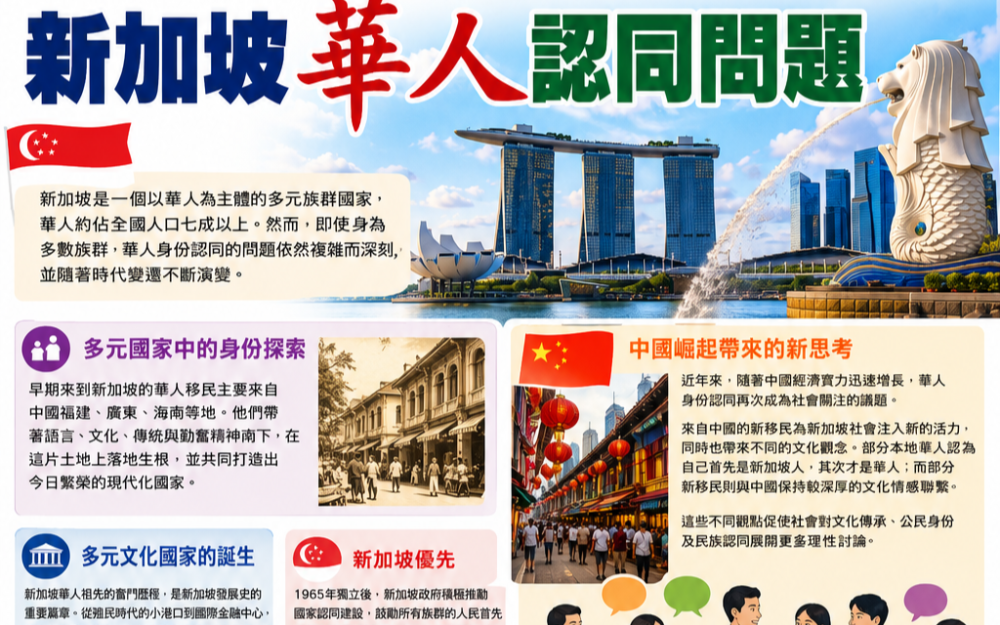
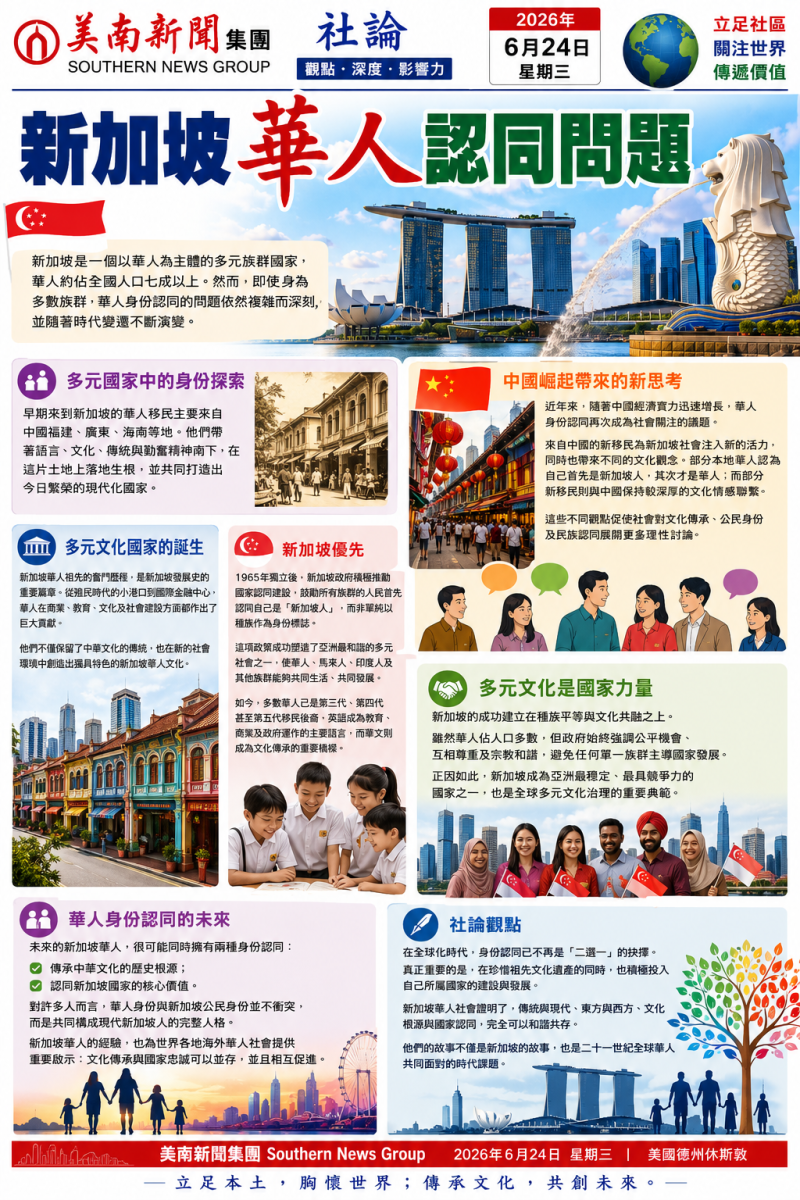
新加坡是一個以華人為主體的多元族群國家,華人約佔全國人口七成以上。然而,即使身為多數族群,華人身份認同的問題依然複雜而深刻,並隨著時代變遷不斷演變。
早期來到新加坡的華人移民主要來自中國福建、廣東、海南等地。他們帶著語言、文化、傳統與勤奮精神南下,在這片土地上落地生根,並共同打造出今日繁榮的現代化國家。
多元文化國家的誕生
新加坡華人祖先的奮鬥歷程,是新加坡發展史的重要篇章。從殖民時代的小港口到國際金融中心,華人在商業、教育、文化及社會建設方面都作出了巨大貢獻。
他們不僅保留了中華文化的傳統,也在新的社會環境中創造出獨具特色的新加坡華人文化。
新加坡優先
1965年獨立後,新加坡政府積極推動國家認同建設,鼓勵所有族群的人民首先認同自己是「新加坡人」,而非單純以種族作為身份標誌。
這項政策成功塑造了亞洲最和諧的多元社會之一,使華人、馬來人、印度人及其他族群能夠共同生活、共同發展。
如今,多數華人已是第三代、第四代甚至第五代移民後裔。英語成為教育、商業及政府運作的主要語言,而華文則成為文化傳承的重要橋樑。
中國崛起帶來的新思考
近年來,隨著中國經濟實力迅速增長,華人身份認同再次成為社會關注的議題。
來自中國的新移民為新加坡社會注入新的活力,同時也帶來不同的文化觀念。部分本地華人認為自己首先是新加坡人,其次才是華人;而部分新移民則與中國保持較深厚的文化情感聯繫。這些不同觀點促使社會對文化傳承、公民身份及民族認同展開更多理性討論。
多元文化是國家力量
新加坡的成功建立在種族平等與文化共融之上。
雖然華人佔人口多數,但政府始終強調公平機會、互相尊重及宗教和諧,避免任何單一族群主導國家發展。
正因如此,新加坡成為亞洲最穩定、最具競爭力的國家之一,也是全球多元文化治理的重要典範。
華人身份認同的未來
未來的新加坡華人,很可能同時擁有兩種身份認同:
傳承中華文化的歷史根源;
認同新加坡國家的核心價值。
對許多人而言,華人身份與新加坡公民身份並不衝突,而是共同構成現代新加坡人的完整人格。
新加坡華人的經驗,也為世界各地海外華人社會提供重要啟示:文化傳承與國家忠誠可以並存,並且相互促進。
在全球化時代,身份認同已不再是「二選一」的抉擇。
真正重要的是,在珍惜祖先文化遺產的同時,也積極投入自己所屬國家的建設與發展。
新加坡華人社會證明了,傳統與現代、東方與西方、文化根源與國家認同,完全可以和諧共存。
他們的故事不僅是新加坡的故事,也是二十一世紀全球華人共同面對的時代課題。
Singapore: A Multiracial Nation with a Chinese Majority
Singapore is a multicultural nation whose population is predominantly ethnic Chinese, with Chinese people accounting for more than 70% of the population. However, even as the majority ethnic group, questions of Chinese identity remain complex and profound, continually evolving with the passage of time.
The early Chinese immigrants who came to Singapore were mainly from Fujian, Guangdong, and Hainan provinces in China. They brought with them their languages, culture, traditions, and strong work ethic, settling down and taking root in this land. Together, they helped build the prosperous modern nation that Singapore is today.
The Birth of a Multicultural Nation
The struggles and achievements of Singapore’s Chinese ancestors form an important chapter in the country’s history. From a small colonial trading port to a global financial center, the Chinese community has made significant contributions to commerce, education, culture, and social development.
They not only preserved the traditions of Chinese civilization but also created a uniquely Singaporean Chinese culture within a new social environment.
Singapore First
After independence in 1965, the Singapore government actively promoted a national identity, encouraging people of all ethnic backgrounds to identify first and foremost as “Singaporeans” rather than defining themselves solely by race.
This policy successfully helped shape one of Asia’s most harmonious multicultural societies, allowing Chinese, Malays, Indians, and other communities to live and develop together.
Today, most ethnic Chinese Singaporeans are third-, fourth-, or even fifth-generation descendants of immigrants. English has become the primary language of education, business, and government, while Chinese remains an important bridge for cultural heritage and transmission.
New Reflections Amid China’s Rise
In recent years, as China’s economic influence has grown rapidly, questions of Chinese identity have once again become a topic of public discussion.
New immigrants from China have brought fresh energy to Singaporean society, along with different cultural perspectives. Some local Chinese Singaporeans see themselves first as Singaporeans and only secondarily as Chinese, while some newer immigrants maintain stronger cultural and emotional ties with China. These differing viewpoints have encouraged broader and more rational discussions about cultural heritage, citizenship, and ethnic identity.
Multiculturalism as a Source of National Strength
Singapore’s success is built upon the principles of racial equality and cultural integration.
Although ethnic Chinese form the majority of the population, the government consistently emphasizes equal opportunities, mutual respect, and religious harmony, while avoiding the dominance of any single ethnic group in national development.
As a result, Singapore has become one of Asia’s most stable and competitive countries, as well as an important global model for multicultural governance.
The Future of Chinese Identity in Singapore
In the future, Singaporean Chinese are likely to embrace two complementary identities simultaneously:
- Preserving the historical roots of Chinese culture;
- Identifying with the core values of the Singaporean nation.
For many people, being Chinese and being Singaporean are not conflicting identities. Rather, together they form the complete identity of the modern Singaporean individual.
The experience of Singapore’s Chinese community also offers valuable lessons for overseas Chinese communities around the world: cultural heritage and loyalty to one’s nation can coexist and even reinforce one another.
In the age of globalization, identity is no longer a matter of choosing one side over another.
What truly matters is cherishing one’s ancestral cultural heritage while actively contributing to the development and progress of the country one calls home.
Singapore’s Chinese community demonstrates that tradition and modernity, East and West, cultural roots and national identity can coexist harmoniously.
Their story is not only the story of Singapore—it is also a defining challenge and shared experience for Chinese communities around the world in the twenty-first century.
分享到微信
請掃描以上二維碼










相關推薦
查看更多