





川普将与赖清德通电话 台海局势再掀全球关注 美中关係面临新考验


分享到微信

請掃描以上二維碼
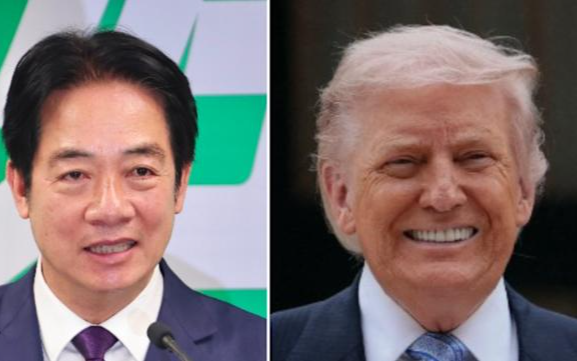
川普将与赖清德通电话
台海局势再掀全球关注 美中关係面临新考验
【综合报导】美国总统 川普日前表示,将与赖清德总统通电话。消息一出,立即引发国际社
川普是在接受媒体访问时公开表示,他「愿意与所有人对话」,包括
此次消息之所以格外敏感,原因在於川普刚结束北京访问不久,并与
分析人士指出,若川普与赖清德真的正式通话,将被视為美台关係的
国际观察家认為,此举可能带来四大效应:
第一,进一步刺激北京强硬反应。中国大陆可能透过外交抗议、军事
第二,美台政治互动将更加公开化。这代表华府对台支持力度可能提
第三,亚太安全情势可能更加紧张。日本、韩国、菲律宾与东南亚各
第四,全球金融市场可能出现波动。尤其半导体、科技与能源市场,
事实上,川普早在2016年首次当选美国总统后,就曾与时任台湾
目前,美国白宫与台湾方面尚未公布确切通话时间,但全球媒体与外
Trump Plans Phone Call With Taiwan President Lai Ching-te
Move Draws Global Attention and Raises New Questions Over U.S.-China Relations
WASHINGTON — U.S. President Donald Trump announced that he plans to hold a phone conversation with Taiwan President Lai Ching-te, a development that has immediately attracted worldwide attention and renewed concerns over tensions across the Taiwan Strait.
Speaking to reporters, Trump stated that he is willing to “talk to everybody,” including Taiwan’s leadership, while emphasizing the importance of maintaining peace and stability in the Indo-Pacific region. Taiwan’s government later responded by saying that President Lai is open to communication with the United States and looks forward to strengthening democratic cooperation and regional security ties.
The announcement comes shortly after Trump concluded his high-profile visit to Beijing, where he held meetings with Chinese President Xi Jinping. Taiwan remains one of the most sensitive and controversial issues in U.S.-China relations, with Beijing strongly opposing any official contact between foreign governments and Taiwan’s leadership.
Political analysts believe that a direct phone call between Trump and Lai would carry enormous symbolic significance and could further reshape the strategic balance in East Asia. In recent years, rising military tensions in the Taiwan Strait and intensifying competition between Washington and Beijing have already heightened global concerns over regional security.
Experts say the potential conversation could have several major consequences:
First, it could trigger a strong reaction from Beijing, including diplomatic protests, military exercises, or economic countermeasures.
Second, it may signal a deeper and more public U.S.-Taiwan political relationship, reinforcing Washington’s support for Taipei.
Third, the move could increase tensions throughout the Indo-Pacific region, with countries such as Japan, South Korea, and the Philippines closely monitoring developments.
Fourth, global financial markets may react cautiously, particularly in sectors tied to semiconductors, technology, and international trade.
Trump previously broke decades of diplomatic precedent in 2016 when he accepted a congratulatory phone call from former Taiwan President Tsai Ing-wen shortly after winning the U.S. presidential election. That conversation was widely viewed as a historic turning point in U.S.-Taiwan relations and sparked strong criticism from Beijing.
As of now, neither the White House nor Taiwan’s presidential office has confirmed a specific date for the expected call. Nevertheless, the possibility of direct communication between Trump and Lai has already become a major topic in international diplomacy and could significantly influence future relations among the United States, China, and Taiwan.
分享到微信
請掃描以上二維碼



















相关推荐
查看更多